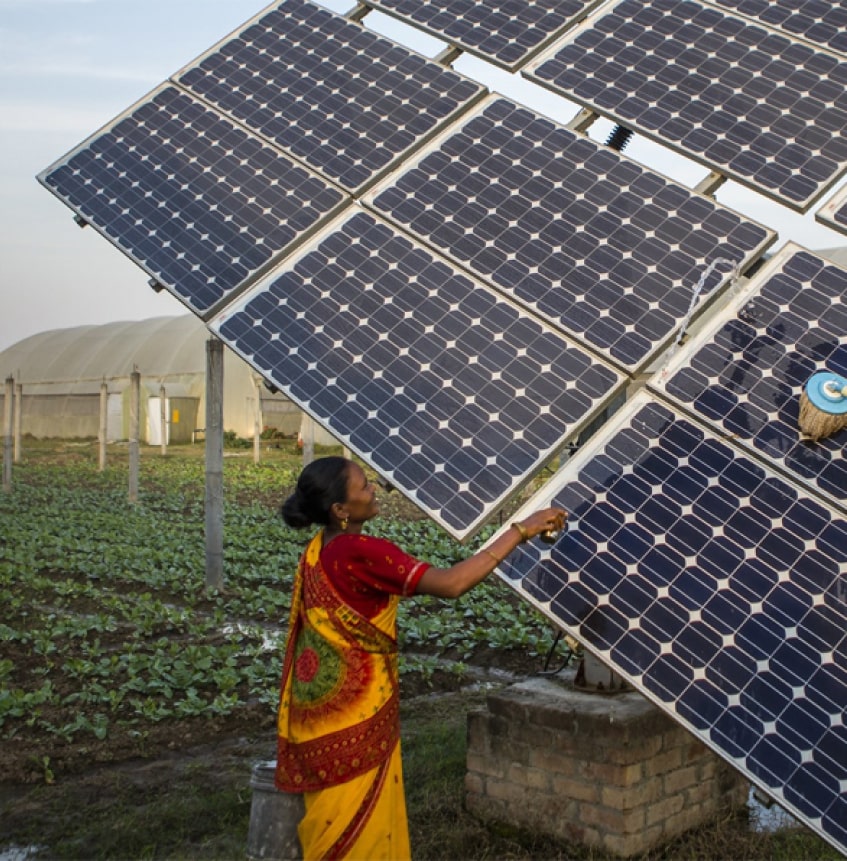
In partnership with MacArthur Foundation, CSBC brings behavioural science to the heart of climate action, enabling individuals, communities, and institutions to make practical and sustainable choices.
Through research, pilot interventions, and capacity building, CSBC supports behaviour change strategies that advance climate mitigation, strengthen adaptation, and support long-term resilience. Grounded in everyday decisions, our work contributes to inclusive, people-first solutions for India.
The Low-Carbon Lifestyles (LCL) programme, developed by the Centre for Social and Behaviour Change (CSBC), is India’s first research initiative focused on using behavioural science to encourage everyday sustainable choices. It addresses how individuals and communities can adopt climate-friendly behaviours in daily life, from travel habits to energy use.
By identifying psychological, contextual, and structural influences, the programme generates evidence-based insights to help individuals shift toward low-carbon lifestyles both improving environmental outcomes and enhancing well-being.
CSBC produced nine diagnostic reports examining behavioural patterns in four key lifestyle sectors: household energy use, urban mobility, food consumption, and waste segregation. Through extensive qualitative interviews, surveys, and behavioural mapping, these reports identify the demand side and supply side barriers that hinder sustainable practices. From the reluctance to adopt electric vehicles to the challenges of consistent waste segregation, the diagnostics uncover where interventions are most needed and which behavioural levers like social norms, incentives, or emotional appeal can drive impact.
Building on its diagnostic phase, CSBC ran three pilots to test behavioural interventions in real-world settings. Two pilots in Mira-Bhayandar and Windlass River Valley focused on improving household waste segregation using visual cues, reminders, and norm-based messaging. A third pilot in Mira-Bhayandar targeted reduced use of high-consumption appliances through behavioural prompts. Together, these studies demonstrated how context-sensitive nudges can promote sustainable behaviours and support large-scale climate mitigation efforts in Indian households.
The Urban Climate Change Norm Survey (UCCN) is India’s first behavioural deep dive into climate-related social norms across energy, mobility, food, waste and lifestyle in urban areas. Conducted with 2,417 participants across cities like Hyderabad, Guwahati, Mumbai, Delhi and Kolkata, it used the ECO framework, which evaluates existing norms, creates new positive ones and overturns harmful ones. Findings show that only one-third of participants hold strong norms, highlighting the need for targeted climate-positive interventions.
CSBC and ABCD are developing interventions that employ micro-trainings and nudges to adopt proper waste segregation and energy-saving behaviours in their daily routines. The intervention will target over 2,500 middle- and high-income households across Delhi and Mumbai. Through a tech-enabled approach, these messages will enable brief, frequent nudges and micro-training modules that are contextually relevant and timed to maximize impact. Messages can be customized based on user profiles and behavioral insights, ensuring that reminders and content are both engaging and actionable.
What We Do?
CSBC’s Climate team uses behavioural science to explore, test, and scale interventions that promote sustainable choices, while building capacity across institutions and communities for lasting climate action.
Behaviour Change Interventions
CSBC partners with government bodies and NGOs to pilot behavioural interventions in waste and energy, generating insights on feasibility, behaviour change, and scaling sustainable practices.
Foundational Research
CSBC studies how behavioural levers shape actions in EVs, transport, solar, efficiency, waste, and food, using diagnostics to identify drivers and barriers for evidence-based sustainable interventions.
Capability
Building
CSBC adopts a systematic approach to capacity building through targeted training and workshops on climate action and behavioural science, empowering stakeholders to drive behavioural change at the grassroots level.
Partnerships
We collaborate with multidisciplinary experts and reputed organisations on pioneering
projects to test and identify behavioural problems and develop intervention strategies.
Partnerships
We collaborate with multidisciplinary experts and reputed organisations on pioneering
projects to test and identify behavioural problems and develop intervention strategies.
Meet Our Team
Empirical research, data-driven insights, and academic collaboration are the heart of our deliberative approach to bringing impact.
Pramath Raj Sinha
Co-founder, Ashoka University
Dr Pramath Raj Sinha is a Senior Advisor of the Albright Stonebridge Group, India and the Founder and Managing Director of 9.9 Mediaworx Private Limited.
Pavan, a policy advisor and social scientist, leads India’s behavioural science efforts in health, education, and gender at Centre for Social and Behaviour Change at Ashoka University.
Dr. Sharon Barnhardt directs research at Ashoka University, studying sanitation and malnutrition through behavioural experiments to inform Indian policy.
Zarna, a design strategist, integrates human-centered design, behavioural science, and policy to create impactful, scalable solutions for social change.
Tishara is a consultant dedicated to designing human-centred solutions for complex development challenges leading capacity building & dissemination to drive the application of behavioural science for climate action.